


 Around
 Oval
Oval
 Emerald
 Cushion
 Radiant
 Pear
Pear
 Marquise
 Princess
 Asscher
 Heart
Heart
 Baguette
 18K White Gold
 18K Yellow Gold
 18K Rose Gold
 Platinum


1 Carat Diamond: Size, Quality and What to Expect
One carat equals 0.2 grams, which translates to a diameter of approximately 6.4 to 6.5 mm for a round brilliant. The final value of a 1 carat diamond is determined by four characteristics together: carat, color, clarity, and cut quality. Lab-grown diamonds are chemically, physically, and optically identical to mined diamonds, but significantly more affordable due to the elimination of mining and intermediaries.
- 1.00 ct round brilliant: approximately 6.4 to 6.5 mm diameter
- Vondel Diamonds exclusively selects D–F color, VVS–VS clarity, Triple Excellent cut
- All diamonds of 1.00 ct and larger come with an IGI certificate
- Custom Design service: free 3D design and no-obligation quote
What you get for your budget depends on the color, clarity, cut quality, and shape of the stone. Below, you can read what 1 carat precisely means, how big such a diamond looks on your finger, and why its origin makes such a big difference. Vondel Diamonds works directly with diamond laboratories worldwide and exclusively selects stones of the highest quality grade: D–F color, VVS–VS clarity, and Triple Excellent cut (the highest rating for proportions, symmetry, and finish).
What is 1 carat and how big does it look?
One carat (ct) represents a weight of 0.2 grams. It refers to the weight of the diamond, not directly its size. Nevertheless, carat gives a good indication of the visual size. A round brilliant-cut diamond of 1.00 ct has a diameter of approximately 6.4 to 6.5 mm. This is comparable to the top of a standard pencil.
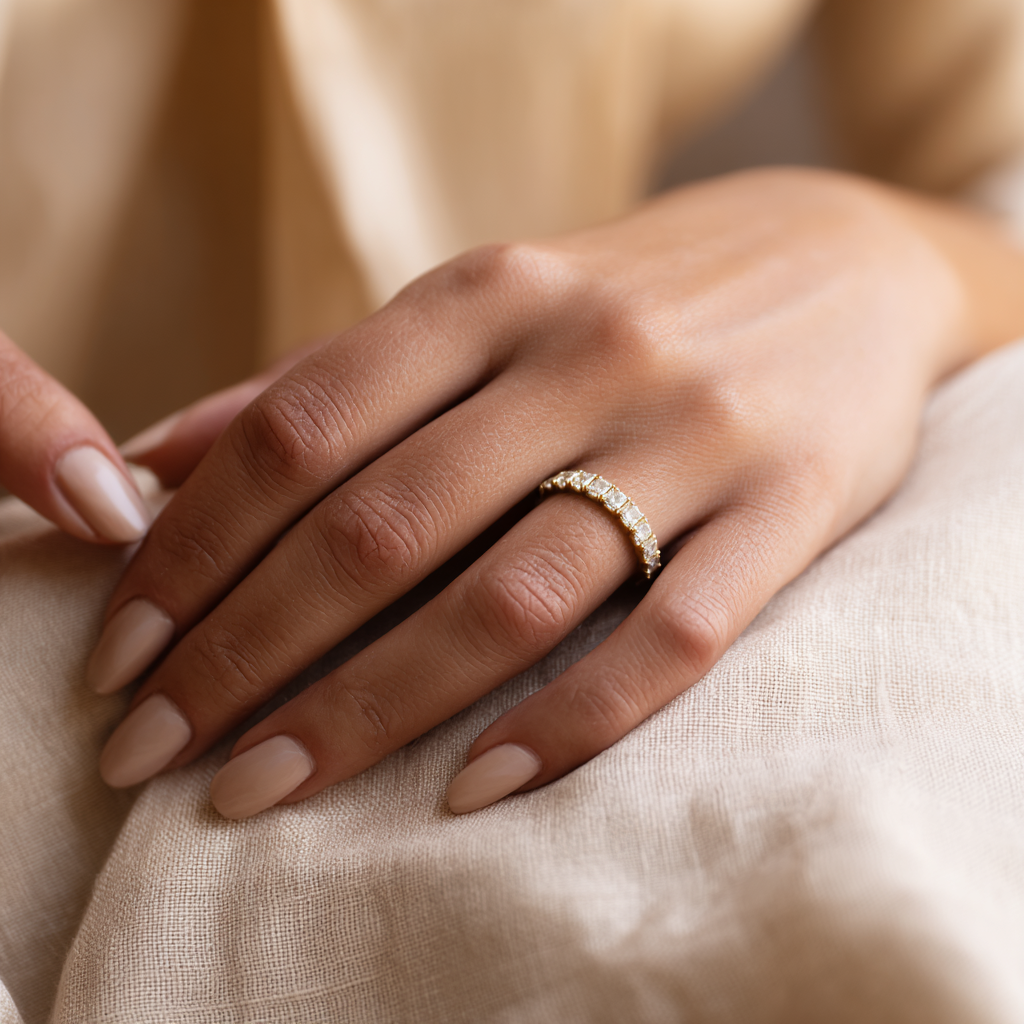
On the finger, a 1 carat diamond stands out immediately without being overly large. In an oval or marquise cut, the same stone appears optically larger because its surface is more spread out. An oval 1 ct diamond measures approximately 7 x 5 mm, compared to the 6.4 mm diameter of a round brilliant. If you choose round? Then you get maximum brilliance in a compact shape.
Lab-grown vs. mined: why the difference is so significant
The biggest difference in a 1 carat diamond lies in its origin. Lab-grown diamonds are chemically, physically, and optically identical to mined diamonds. The difference arises because production via the CVD method (Chemical Vapor Deposition, where a diamond grows layer by layer from a carbon-rich gas) requires no mining, transportation, or intermediaries. Consequently, a mined diamond of comparable quality comes at a significantly higher price.
At Vondel Diamonds, this advantage is even greater: by sourcing directly from diamond laboratories, without intermediaries, you get more carat for the same budget. For some of our partners, we have exclusive rights within the Benelux, giving you access to stones that are not widely available on the market.
Furthermore, lab-grown diamonds are conflict-free and mining-free. There is no impact on ecosystems from mining, no child labor, and full traceability. Vondel Diamonds also offsets CO₂ through Trees for All.
The four factors determining the value of 1 carat
Carat alone does not determine the value. Four characteristics together form the complete picture, known as the 4 Cs:
|
Characteristic |
What it measures |
Vondel Diamonds standard |
|
Carat |
Weight of the diamond; 1.00 ct = 0.2 grams |
Wide range, with emphasis on 1 ct and higher |
|
Color |
Degree of colorlessness on a scale from D to Z |
D–F (colorless to nearly colorless) |
|
Clarity |
Presence of internal characteristics (inclusions) |
VVS–VS (very very slightly to very slightly included) |
|
Cut |
Proportions, symmetry, and finish |
Triple Excellent |
A 1 carat diamond with D-color and VVS1-clarity is significantly more valuable than a stone of the same weight with a lower color or clarity grade. Moreover, the cut quality has the greatest influence on brilliance. A Triple Excellent cut ensures optimal light reflection. Want to know more about how these four characteristics work precisely? We cover this extensively in our article about the 4 Cs.
The influence of cut on size and value
The cut also plays a role. A round brilliant is generally more expensive per carat than an oval, cushion, or emerald cut, because more rough material is lost during cutting. Here's a handy rule of thumb: elongated shapes like oval, pear, and marquise visually offer more surface area on the finger for 1 carat, while the value per carat is often more favorable than for round cuts. If you're looking for the most visual size for your budget, an oval or pear cut is a strong choice.
Engagement rings with 1 carat at Vondel Diamonds
At Vondel Diamonds, you'll find a wide collection of engagement rings that are beautifully showcased with a 1 carat lab-grown diamond. Some popular models from the collection include:
The Lisa, an oval solitaire with a hidden halo (a cluster of small diamonds hidden beneath the main stone). The Estelle, with a cathedral setting, pavé band, hidden halo, and diamond bridge, for those seeking a more richly decorated ring. The Mia, an oval solitaire with a cathedral setting and hidden halo, combines elegance with a slender appearance. The final composition depends on the chosen stone and metal: 18K white gold, yellow gold, rose gold, or platinum.
All diamonds of 1.00 ct and larger come with an independent IGI certificate (International Gemological Institute, one of the most respected gemological institutes in the world). Would you like a fully custom design? Through the Custom Design service, the Vondel team provides a free 3D design and a no-obligation quote.
More carat for the same budget
At a traditional jeweler offering mined diamonds, an average engagement ring budget typically yields a significantly smaller stone. At Vondel Diamonds, for the same amount, you can choose a ring with a 1 carat lab-grown diamond in a high-quality setting, with D–F color and VVS–VS clarity. Conflict-free, mining-free, and including an IGI certificate.
This difference stems from two factors: lab-grown diamonds are more affordable per carat than mined stones, and Vondel Diamonds completely eliminates intermediaries by working directly with diamond laboratories. For some of these partners, Vondel holds exclusive Benelux rights.
Whether you're looking for an engagement ring or want to compare loose stones: at Vondel Diamonds, you'll receive personal advice in the boutique on Hobbemastraat in Amsterdam, even without an appointment. The store is open seven days a week from 11:00 AM to 5:30 PM.
Frequently Asked Questions
How big is a 1 carat diamond really?
A round brilliant of 1.00 ct has a diameter of approximately 6.4 to 6.5 mm. This is comparable to the top of a pencil. In an oval or pear cut, the stone appears optically larger due to its elongated surface.
Is 1 carat big enough for an engagement ring?
Yes, 1 carat is one of the most popular weights for engagement rings. The stone is noticeable on the hand without being overly large. With the right cut and setting, you can create a striking piece of jewelry.
Is a 0.90 ct diamond a good alternative to 1 carat?
Yes. A 0.90 ct diamond is barely distinguishable from 1 carat with the naked eye, but is often significantly more affordable. At Vondel Diamonds, this is a popular choice for those who want maximum value within their available budget.
Which cut provides the most visual size for 1 carat?
Elongated shapes like oval, pear, and marquise spread the surface more across the finger. An oval 1 ct diamond measures approximately 7 x 5 mm, compared to 6.4 mm for a round brilliant. Visually, the oval variant therefore appears larger.
What is the difference between lab-grown and mined for 1 carat?
Lab-grown and mined diamonds are chemically, physically, and optically identical. The difference lies in their origin: lab-grown diamonds are produced via the CVD method without mining. As a result, lab-grown diamonds are conflict-free, fully traceable, and significantly more affordable per carat.

